Picture
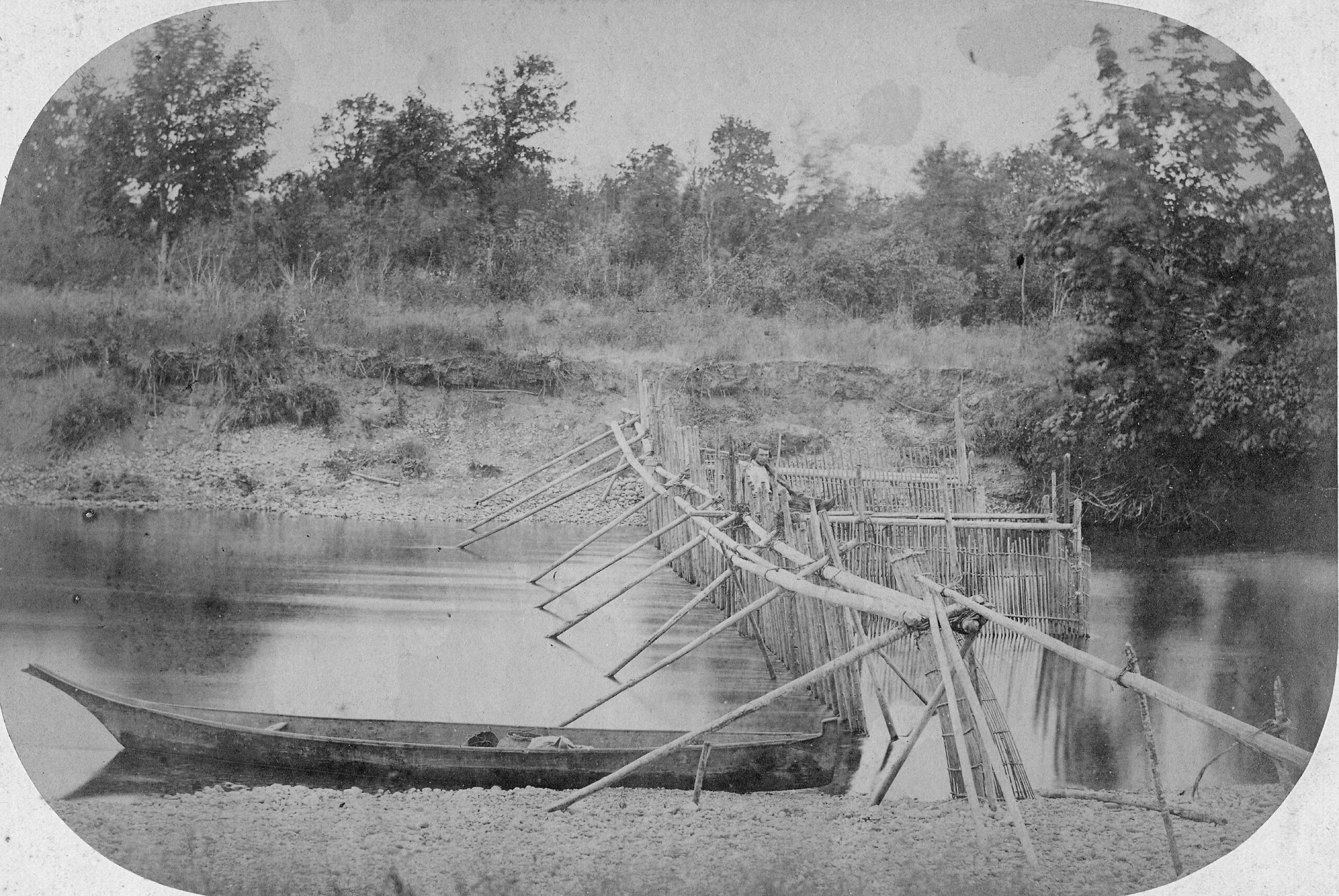
Caption:
Picture Name:
Salmon Weir |
Time or Period:
ca 1860s-70s
Theme(s):
fishing, weirs, salmon
Location:
cowichan river
Source Info (type and name):
newspaper
Cowichan Valley Museum & Archives
About the picture:
About the photograph:
This photograph is from the Cowichan Valley Museum & Archives collection. The Royal BC Museum and Archives also has this photograph in their collection (H-06525). The image was taken by Frederick Dally sometime between 1866 and 1870 on the Cowichan River.
Frederick Dally was a photographer who owned a studio in Victoria during the late 19th century. At his studio, people could order albums with a selection of Frederick Dally prints in it. The album this image comes from included the following caption for the photograph:
“The two salmon traps shown in this photograph are most beautifully made, and are fished in and watched during the night, the boy has take his place beside a long pole which is cleft at one end and which he lets depend from his nose, and with the trap door up, and open, goes to sleep, and when a salmon rushes in he immediately feels the jar given to his nose, drops the door, and spears the fish, which he is well able to see as it swims about from the brightness of its scales. N.B. Whenever I told this in Victoria to my friends they were always incredulous, and remarked if any one else had told us this we should not have believed them.”
About weirs:
Weirs were first introduced into the Quw’utsun homeland by Syalutsa, the first person to fall from the sky.
This photograph is one of the most well-known photographs of a salmon weir. Salmon weirs were used by Quw’utsun people to capture salmon as they traveled up river to their spawning grounds. Before the arrival of Europeans to Quw’utsun territory, it was not uncommon to find anywhere from 15 to 21 weirs on the Cowichan River. The use of salmon weirs required a team of experienced fishers to build, operate, and maintain the weirs and traps safely and effectively. Knowledge was highly specialized and was passed on through kin-groups.
In 1894, under pressure from Cannery owners, the federal government brought in legislation that effectively banned weirs. The Quw’utsun people resisted this ban by, among other things, hiring a lawyer to assert their rights to use weirs. Although the use of weirs continued during the early 20th century, the introduction of government regulations and pressure from commercial interests and non-Indigenous settlers eventually resulted in the end of the Quw’utsun use of weirs.
Story
Story Teller:
Ruby Peter
Quamichan Elder
Story Title:
Weir on the Cowichan River | Shxetl i u tthu Quwutsun Staluw
The story was recorded at:
August 10, 2011
Listen to the story:
Watch Videos:
Story body (and translation):
|
(1) |
Nilh niilh yath ’o ha’kwushus tthu Quw’utsun’ xwulmuxw ’u kw’un’a wulh hith thu shxetl’ kws kwunnuhws tthu stseelhtun s’ultuns. |
|
– |
Long ago the Cowichan people used weirs to catch salmon for food. |
|
(2) |
Qux niilh ha’kuwshus ’eelhtun kwus yuthey’tus’i’ nilh tthu xpey’ tse’lumun‘’i tthu sluwi’ nilh niilh thuytum t’um’t’um’utum sus ’o’ t’um’ushtum ni’ hwuxwi’lum’. |
|
– |
They built them from red cedar poles and rope. |
|
(3) |
Ni’ saay’stum’ tthu shq’utuw’ulh nem’ shhwhunum’s kws hwxwuy’xwute’wut thu shxetl’ sus nem’ ’o’ tslhaqw tthu stseelhtun nem’ tuyul. |
|
– |
They made rope by pounding and braiding the inner bark. |
|
(4) |
’I’ nilh tu’i snuhwulh, nilh ni’ shhw’aalhstewut tthu stseelhtun ’u kwus wulh m’i qw’imutus tthu stseelhtun, ’i’ nilh ni’ shhw’aalhstuxws kws nem’ t’ukw’sthwus. |
|
– |
The weir had a platform to walk out on in order to open the gates. Some of the salmon were let through so they could go upriver to spawn. |
|
(5) |
’I’ no’ sxuxits ’ul’ tthu ni’ yukwukun’utus ’eelhtun, no’ yustl’atl’um’ ’ul’ ’u tthu tum’xuytl’ kwus pekw’utus ’i’ ni’ nilh ni’ s’ulhtuns. |
|
– |
The canoe next to the weir is how they transported the salmon home. |
|
(6) |
’Uwu kws kw’ey’s tthu hwulmuhw kws quxs stseelhtun. Ni’ yu’eeye’q tthu ni’ yuha’kwushus—tthu thuqi’, tthu stth’aqwi’, tthu kw’a’luhw. |
|
– |
They only took enough fish to smoke for the winter. The First Nations peoples never went hungry because there was always a lot of salmon. There were different species—sockeye, spring salmon, dog salmon. |
|
(7) |
Nilh tthu kw’a’luhw nilh hay ’ul’ ’o’ ’ulh tl’i’st-hwus tthu hwulmuhw, nilh kws hul’iqs kws ts’uy’hwt-s. |
|
– |
Dog salmon was the favorite because it was easiest to preserve. |
|
(8) |
’i’ n’o’ qxe’luts tthu ni’ thuyt thu shxetl’ ’uwu niis ’o’ na’nuts’a’ ’ul’, qxe’luts, no’ kw’iinu tthu ni’ ts’its’uwa’tul’. |
|
– |
An extended family would join together to make a weir. It was not just one family, but many people that helped one another. |
Credits
Leave a Reply